
The Lie That Made a Generation of Women Sick
For a decade, ambition got sold to women as a personality trait. We need to talk about what it cost us....
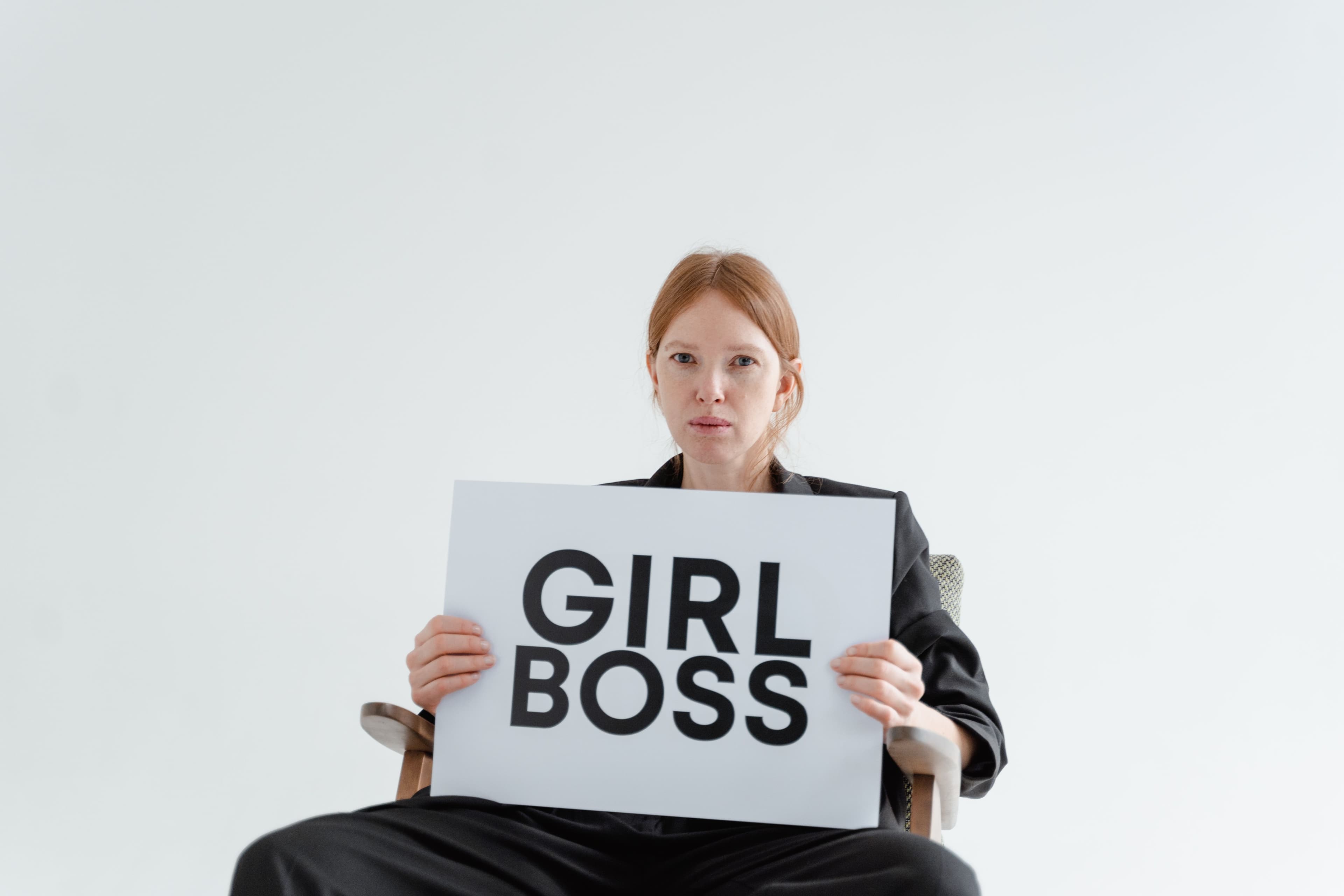
The girlboss didn't just fade out of fashion. This week on the show, I dig into what changed and why.
There's a quote that's been circulating for months: the more healed you become, the less ambitious you get. I understand why it resonates. I also think it's only half true, and the half that's missing is the half that matters.
I've spent close to four decades studying what happens when the mind is allowed to build, and building isn't the problem; it's a quarter of what a mind does. Think, feel, choose, build. What I want to take apart is a specific, historically dated, and commercially manufactured definition of ambition that told a generation of women that exhaustion was proof of worth.
You know this woman
Maybe you were her. Maybe you're raising her.
She's in early, out late. She answers the email before anyone else has opened their inbox. Her calendar is color-coded, her kids' schedules run like a small airline, and everyone around her says some version of the same sentence: I don't know how she does it all. What almost nobody says, including her, is that at eleven at night she's lying there running tomorrow like a checklist, and there's one sentence on repeat in her head: if I drop one thing, it all falls apart. She doesn't call that fear. She calls it being responsible.
I've watched this pattern for most of my career, long before it had a name. For about a decade, starting in 2013, it got one: the girlboss.
The girlboss was never a personality type
She was a response to real problems: the pay gap, the glass ceiling, or boardrooms with one woman in the room. And the solution that got sold to us was that "you, individually, can out-work it", not "let's fix the structure."
In 2013, Sheryl Sandberg's Lean In told professional women that the fix for an institutional problem was to negotiate harder and sit at the table. A year later, a founder published a memoir with a hashtag in the title. Within a few years, that hashtag was on neon signs in coworking spaces across the country, and ambition stopped being something you did and became something you could buy, wear, and post.
A problem that belonged to an unequal structure got repackaged as a problem that belonged to her. Nobody asked her to change the workplace. She was asked to conquer it alone, while making it look effortless, which isn't ambition so much as an assignment.
Your nonconscious mind, the part of your mind processing everything, all the time, storing every belief you've built about what makes you safe and worth keeping around, can't always tell the difference between I want this and I was assigned this and told my worth depends on it. This is one reason why so many self-aware women got fooled by their own drive for a decade: they were never taught that there is actually a difference.
What this does to the body
Chronic, achievement-driven overwork keeps cortisol elevated, and it stays elevated during the hours you're supposedly resting. Researchers studying workaholism have found people showing meaningfully higher cortisol reactivity even during periods specifically labeled as downtime: a Sunday afternoon, a vacation, or one unscheduled hour.
Cell biologist Bruce Lipton's work on gene expression has pointed to this mechanism for two decades: perception and belief directly regulate which genes turn on and off. So when the belief underneath your calendar is I am only safe if I am producing, that isn't sitting inert in your head. It's a chemical signal shaping your sleep, your immune function, and how your body handles an ordinary Tuesday.
Think of the last completely unscheduled hour you had. What did your body do with it? Relax, or a low hum of something's wrong, I should be doing something? That hum is your nonconscious mind flagging an empty hour as unfamiliar territory, because for years, output was the thing that kept you loved, funded, or simply not left behind.
Some of you are ambitious for reasons that have nothing to do with fear, and that's real. What matters is whether the drive has an off switch, or whether stopping produces real dread instead of ordinary tiredness.
Naming it directly
Lean In told a generation of women that the path through workplace inequality was to fix the institution and fix their own self-doubt, at the same time, as an individual project. I want to be fair to what the book was trying to do; it came from a real place, and it helped some women feel less alone in rooms that felt like a battle zone.
But underneath this encouragement, the framing handed half the fix to her personal psychology. When a woman works herself into hormonal dysregulation trying to solve a structural problem alone — because it can't actually be solved that way — she rarely concludes the assignment was wrong. She concludes she didn't try hard enough.
And by 2014, the girlboss had a memoir and eventually a streaming adaptation. By 2019, "boss babe" was on neon signs from Los Angeles to London. A marketing engine had recognized a lucrative emotional pattern and scaled it. A woman's fear that she wasn't doing enough became a product category. It's sold a tremendous amount of merchandise. It has never once closed a pay gap.
Three companies, one mechanism
"The girlboss era was flawed" isn't a new observation. What's worth looking at is what happened when three of the most visible girlboss-era brands got examined from the inside.
Away, the luggage brand, came apart fastest. Reporting in 2019 surfaced a CEO berating employees in company-wide Slack channels, including a reported comment telling a staff member on mental-health leave to stop using her anxiety as an excuse. She was out of the top role within days.
The Wing built its identity on the aesthetic of women supporting women: pink interiors and a members-only promise of solidarity. It faced a multimillion-dollar discrimination lawsuit, and separate reporting found the company's own lower-wage staff weren't extended anything like the care being sold to paying members. The co-founder resigned after employees signed an open letter over how the company handled a public-health emergency and racial equity. The company itself was gone within two years.
Glossier built its brand voice on "you, but better" — universal inclusivity as the whole pitch. In 2020, former retail employees described a workplace with anti-Blackness and poor treatment running underneath the empowerment messaging. The company apologized publicly and pledged funding to Black-owned beauty businesses. Within two years, most retail staff had been laid off, and the founder had stepped down.
Three unrelated scandals, on the surface. Underneath, one nonconscious coping pattern — perform effortless strength, never show the cost, keep producing no matter what — scaled up from a single woman's calendar into an entire company's culture. The girlboss got very good at thriving inside pre-existing structures, and thriving inside an unfair structure without complaint isn't the same thing as fixing it. She just wore the exhaustion better than the men who came before her, until 2020 forced everyone to look underneath the brand.
A real-time test
Pick one thing on your plate right now: a project, a commitment, or a goal you're chasing. Imagine, in detail, not doing it. Pay attention to what happens in your body. If what surfaces is disappointment — a wistful "aw, I wanted that"— that's very likely ambition your mind built on purpose, something that matters to you on its own terms. If what surfaces is closer to alarm — a tightness in your chest or an immediate then what would I even be — that's a strong indication that your nonconscious mind is treating the goal as a safety mechanism, not a preference.
Ambition runs undetected longer than most threat patterns because it's one of the only ones our culture applauds. Nobody claps when you check your phone forty times an hour. People clap when you answer emails from a hospital bed.
Slowing down, on its own, doesn't resolve this, either. Stopping the striving without ever looking at what was driving it, and you can just as easily build a new performance out of rest. The fix is finding out which parts were built by fear, and rebuilding them on purpose around something you'd still want when nobody is watching.
Take the thing that produced alarm and ask yourself one question: who, specifically, would be disappointed in me if I let this go? Sometimes the answer is a real person from your past. Sometimes it's nobody currently living, just an old standard you built at eleven or fourteen. Naming the source moves the goal out of the vague territory of "who I am" and into the far more workable territory of "a pattern I built once, for a reason that made sense at the time."
Healing redirects ambition
Healing and ambition aren't opposites; one side doesn't have to disappear so the other can rise. I think that's the most common misunderstanding in this whole conversation.
Your mind is built to think, feel, choose, and build continuously for your entire life. That's not something you heal your way out of. What changes, once the underlying fear actually gets processed instead of outrun, is the target. The drive that used to go toward proving you deserved rest, love, or safety gets freed up for something you'd choose with nothing to prove.
In fact, when a thought actually gets processed instead of outrun for another year, the mind isn't erasing anything. It's building a new, higher-quality structure on top of the old pattern in the same way a gardener replants a bed rather than ripping it out. The old fear-built goal doesn't have to disappear for a new mind-built one to take root — the energy that used to service the fear becomes available for something you'd choose freely. Women who say they feel "less ambitious" after doing real work on themselves are often describing the first few weeks of that reallocation, before the new target has fully taken hold. It can feel like emptiness right before it feels like freedom.
Thirty-eight years into this work, the thing I trust more than any single study is this: a mind given the chance to build toward something it chose doesn't sit still, and it doesn't shrink. It gets steadier under pressure, clearer about what it wants, and less interested in performing for a room. This is an ambition that's stopped being a threat-avoidance strategy and started being an actual choice.
I unpack this one in full on this week's episode of The Dr. Leaf Show — the cortisol and gene-expression research, the Lean In framework, and exactly how Away, The Wing, and Glossier came apart.